
Skills required by a person to succeed as an entrepreneur are called entrepreneurial skills. An entrepreneur is a person who starts a business with the aim of providing a product or service to the people and making a profit in return. The act of starting such a business is called entrepreneurship. Entrepreneurial skills are one of the employability skills in the CBSE curriculum, along with communication skills and ICT skills.
At the end of this guide, you will be able to
- Explain different types of businesses
- Discuss about common businesses around them
- Describe entrepreneurship characteristics
- Identify a successful entrepreneur
- Challenge the myths around entrepreneurship
Table of contents
Types of businesses
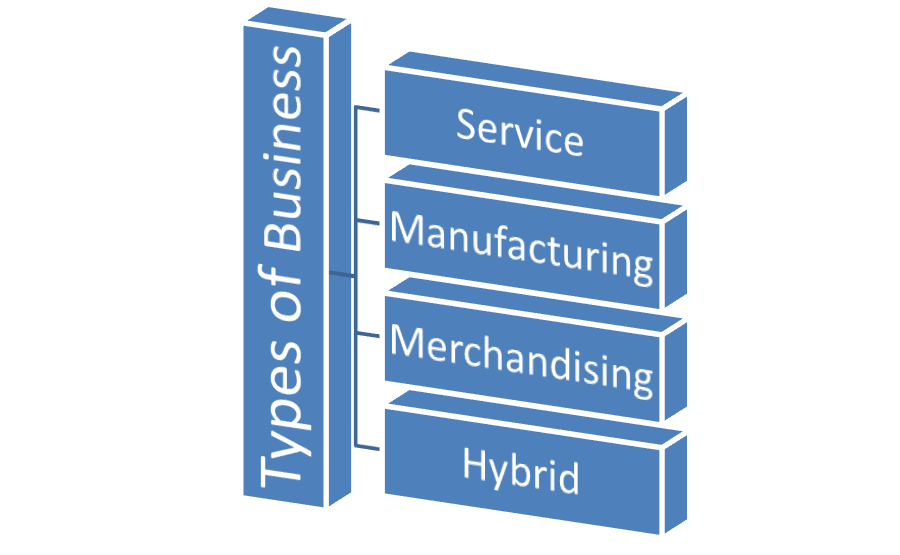
Any organisation that uses economic resources to provide services or product to any person or organisation is a business. Business is a commercial activity and exchange of money or goods must take place between the parties involved.
When you look around you can see different types of businesses running. For example,
- The stationary shop from where you buy your books, copies, pencils or pens
- The grocery shop where your mother goes to buy the groceries
- The milk booth from where you get milk or other milk products
- The restaurant where you go to celebrate your birthday
All these are businesses but of very different types. Let’s see what the basic types of business are.
Service business
An individual or an organisation providing professional expertise, advice, guidance or any such thing that has no physical form is called a service business. Let’s take some examples to understand this. If your fan stops working, you call the electrician, who repairs it. The electrician here is providing you a service and his business is a service business.
When you are unwell you go to a doctor. Here also the doctor is providing you with healthcare services. The doctor is in service business. So are the hospitals, banks, shops, colleges and insurance offices around you.
The cost of service that must be paid includes value of the service provider’s skill and time as well as cost of any material, if used.
Manufacturing business
Unlike the service business, manufacturing business provides you with a tangible product that you can see. Manufacturing business units purchase goods and process it to convert into a new product. The items used to make the product are called raw materials. Again, let’s take some examples to understand this.
Garment manufacturing unit purchases cloth from handlooms or textile factories and stitches them into finished products like shirts, trousers, dresses, etc. These products are then sold to the customers. The garment manufacturing unit is a manufacturing business.
A glass factory would purchase glass and then convert them into crockery items like cups, glasses, dinner set, etc. and sell them to the customers. This is also a manufacturing business.
The cost of a product includes not only the raw material but also infrastructure cost, labour charges, cost of marketing, etc.
Merchandising business
The goods that are manufactured at manufacturing units are usually not sold to the customers directly. The business owners are often expert at manufacturing the goods but not necessarily at selling them. So, some businesses source the goods from manufacturers and sell it to customers. They are in merchandising business or retail business. They are often called buy and sell business because they are buying a product and then selling it without adding any value to it.
You might be wondering why the retailers are in business and what the source of their revenue is. Well, they earn by selling the product at a price higher than their purchase price.
Hybrid businesses
As the name suggests, hybrid businesses are those businesses that cannot be strictly put into any of the three categories discussed above. Let’s take an example to understand this.
You must have visited a restaurant to have lunch or dinner with your friends or family. Can you tell what type of business is a restaurant?
To answer this, we need to closely examine what a restaurant does.
A restaurant gets groceries from a shop and makes food out of it. That is manufacturing. The restaurant also sells readymade products like cold drinks. That is merchandising. It provides service to the customer according to their requirements. That is service business.
You can see that a restaurant does a bit of everything that we have discussed till now. So, it is a hybrid business.
However, for commercial and legal purposes all businesses must be categorised into one single business type. In our case, restaurant is mainly providing dining services to its customers. Whatever it does, including manufacturing and merchandising, is for providing that service. Hence restaurant is a service business.
What is Entrepreneurship
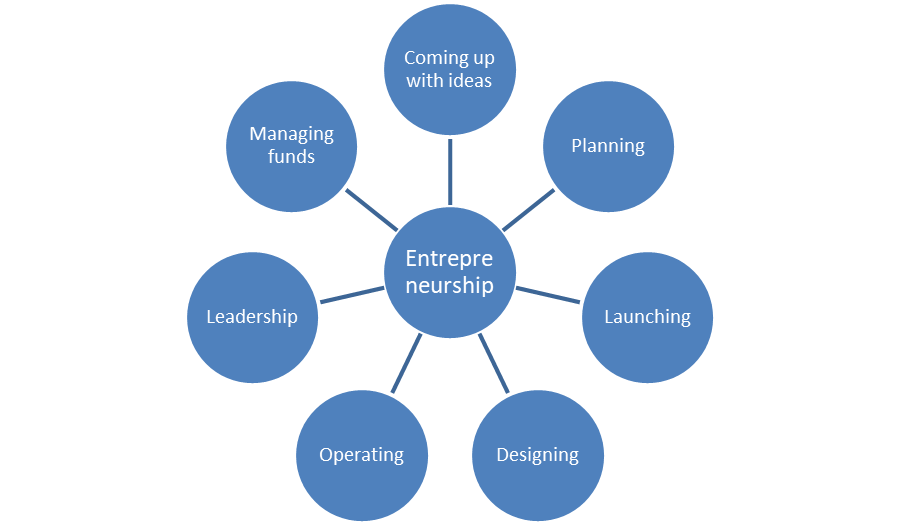
The act of planning, launching and operating a business that solves customer problems innovatively while also making profits is called entrepreneurship. It involves multiple activities such as
- Coming up with ideas
- Planning
- Managing funds
- Designing business processes
- Launching the business
- Running or operating the business
- Leadership
A person who starts a business to solve customer problems in an innovative way and make profits is an entrepreneur. To begin with, not everybody wants to make a profit. They have a great idea and feel that others will benefit out of it. They start a business and become entrepreneurs.
Characteristics of entrepreneurship
Here are some characteristics of entrepreneurship:
- Identifying customer needs
- Doing something to solve the need in a way that has not been done before
- Employing new and better ways to solve existing problems
- Taking risks
Rewards of entrepreneurship
Entrepreneurship has its risks. What if the idea does not click? What if there aren’t enough customers for the business idea? What if my customers go to competitors? Do I have the right skills and resources to execute this? What if there are bottlenecks that were not anticipated? But entrepreneurship has its own rewards as well, which attracts people. Here are some of those rewards:
- Creating jobs – If there are no businesses there would be no jobs. Entrepreneurs are required to start businesses and create jobs for others. They are risk takers who don’t mind putting their whole life and skill on fire so that they may be able to generate profit and help others on the way.
- Bringing about change – Many entrepreneurs start a business so that they may bring about a social and economic change in the society. Jamshedji Tata wanted to build an iron and steel plant in India so that India could become a producer rather than the consumer of steel. Without his vision India would not have been the steel superpower that it is today.
- Giving back to society – You must have been told time and again that man is a social animal. What does it mean exactly? It means that human beings cannot live without the society. The society provides them with the environment to grow into a complete human being. Therefore, it becomes the responsibility of that person to give back to society when they are able to. Once the entrepreneurs are successful, i.e. they are able to generate profit, they usually take up social causes like taking care of the elderly, educating children, setting up healthcare units, etc.
Why should you become an entrepreneur?
On the face of it, being an entrepreneur is not easy. You have learnt about the risks involved. Besides the risks, there is lots of hard work required to start and operate a business. So why should you become an entrepreneur? Well, here are some reasons for you to consider:
- You do not need to depend on anyone else for earning a living. In fact, you can provide others a means of livelihood.
- You can do things the way you think to be right. You might make mistakes but you will learn from them and you can do other things that are right.
- You can have a life of your own. When you work for others you have to work according to their requirements and time. But if you work for yourself you are your own boss and you can decide your own time.
- You are free to take risks in your career.
- You can be as creative as you want. You are not bound by rules and regulations to do everything.
- Sky is the limit for you if you run your own business. You can take it to any height you want.
With benefits come responsibilities. Here are some responsibilities you must shoulder as an entrepreneur:
- Leading the team – As the one who started the business with some ideas, goals and plans, you know where you want to take it. You must lead the team from the front and share your vision with them.
- Establishing company culture – As the person ultimately responsible for the enterprise, you must decide the culture of the company. You need to build a culture around work environment, relationship between the employees, the way the seniors treat their juniors, trainings for the new employees, fulfilling social obligations, deciding methods of doing business, etc.
- Strategic planning – Leading the team is not sufficient for the entrepreneur. They must also know where they want the company to go next and how. This how is the part for which they need to plan strategically. Putting short term as well as long term goals in place, which may be shared with the whole team to follow, is essential.
- Establishing relationships – Building relationships is not only important among the team members. An entrepreneur also needs to connect with other business owners, academicians, influencers, etc. to fulfil their professional goals.
Characteristics of successful entrepreneur
These are some of the characteristics of successful entrepreneur:
- They are very passionate about the idea on which their business is based.
- An entrepreneur is a leader who is capable of sharing their vision with their team so that they may together achieve the business goals.
- A successful entrepreneur is highly motivated. They always keep their goal in mind and work towards that goal. Small setbacks in the day-to-day functioning of the business do not demotivate them.
- Successful entrepreneurs are disciplined, hardworking and confident of achieving success.
- They are not afraid to take risks. Whether it is small or big, successful entrepreneurs know that they cannot succeed unless they take risks.
- They know how to plan for daily, weekly, monthly as well as long term goals. They appreciate the difference between effective planning and over-planning so that they don’t lose the flexibility to react to an unexpected situation. If you plan for all possible scenarios, you will find it challenging to handle new situations as they come up. So the planning must have enough scope for making changes.
Relationship between Entrepreneurship and Society
Entrepreneurship is very essential for economic and social development of the society that we live in. By starting a business, entrepreneurs provide opportunity for economic growth to the people around them. The jobs that are created due to the new business employ many people and hence improve status and quality of those families.
Together with economic growth new businesses also promote creativity, innovation and better life quality. Most of the entrepreneurs, when they are successful, want to give back to society. So they work for causes that can benefit people, like healthcare, education, research, caring for the old, better life quality, etc.
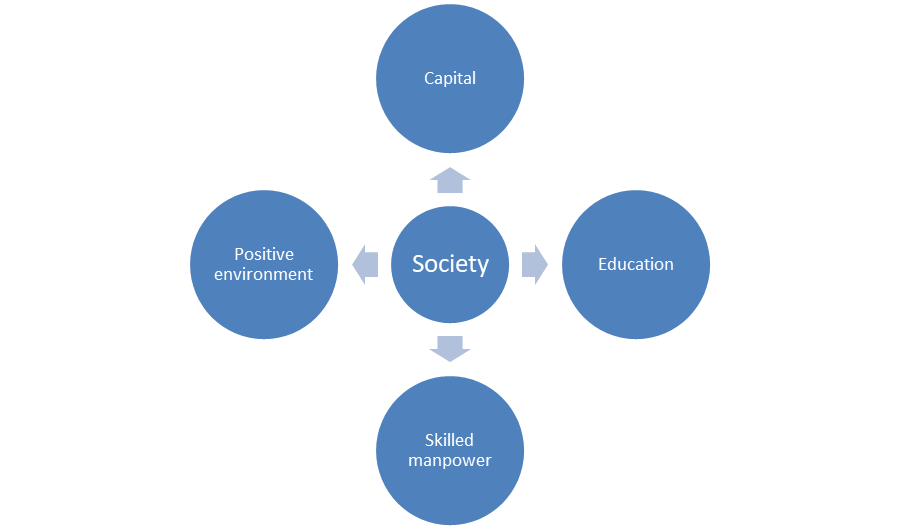
It is not only that the society needs entrepreneurs. Vice versa holds good as well. That is, entrepreneurs need society too.
Society provides entrepreneurs with the necessary education and skills needed to start a business. Once the business is launched it needs a positive and friendly environment to grow and become successful. Society facilitates the right environment needed for them to thrive.
Entrepreneurs also need skilful people to work with them and that can be provided only by the society. Many times the financial needs of entrepreneurs is also met by society through venture capitalists and crowdfunding.
Qualities and Functions of an Entrepreneur
Now that you know that entrepreneurs are very essential to the social ecosystem, let us list some of the qualities that an entrepreneur must possess to be successful:
- Hard working
- Full of ideas
- Good planner
- Expert in at least one field
- Creative
- Willing to be a leader
- Disciplined
- Marketing skills
- Good networking skills
- Money management skills
When an entrepreneur starts a business, they need to think beyond just launch and also focus on day-to-day running of the business. These are some of the roles that they fulfil for the business:
- Create jobs
- Recruit the right people
- Lead the team
- Solve everyday problems
- Meet financial targets
- Satisfy customers
Myths about Entrepreneurship
We have discussed the qualities of an entrepreneur as well as their responsibilities. When you look at the list of qualities, it might seem very daunting. This has given rise to lots of myths about entrepreneurship. So before proceeding further let’s discuss some myths prevalent in society about entrepreneurship.
Lack of personal life
The first and foremost myth about entrepreneurship is that entrepreneurs do not have a personal life of their own. They must devote all their time to their business. However, that is not true. They do have a personal life and do things that they want to do. In fact as they are their own masters, they can schedule their work to suit their personal lives. All they need to do is give equal importance to personal and professional lives, and manage their day accordingly.
Love of money
It is true that no entrepreneur will start a business that will not yield a profit but it is rarely true that they do it with the sole motive of earning money. They are often so passionate about their ideas that they start a business to make their dreams come true.
Ritesh Agarwal, the man behind OYO rooms, started his business at the age of 18, before formally completing his degree.
Lots of risk involved
Entrepreneurship involves taking huge risks. Entrepreneurs do take risks but not always. Even when you are working as an employee you take risks while proposing ideas or offering new solutions to problems. So taking risk in your own business is not much different.
You need lots of money to start a business
The amount of money that you need to start a business depends upon your business idea. Also, not all of the money is needed before you launched the business. So lack of money should not stop you from starting a business of your own.
Entrepreneurs are full of great ideas
It is not necessary that you can start a business only when you have some great unique idea. You can take an existing idea, make changes to meet some customer demand and launch a business successfully.
Entrepreneurs are formally trained
Most people believe that entrepreneurs are trained in starting business. But that is not true. Not everyone who starts a business is trained in it. In fact, most of the people starting a business do not know how to run it when they start.
Mark Zuckerberg and Bill Gates are two people who dropped out of college to start their own businesses. Michel Dell, owner of Dell, a global computer manufacturing company, started a business in his hostel room when he was in 1st year of college.
Entrepreneurship as a career option
Entrepreneurship is fast emerging as a viable career option for many people, especially in developing economies like India. This is mainly due to these reasons:
- Job opportunities are not growing at the same rate as people eligible for joining the workforce.
- People are becoming more mindful of what they want to do in life before embarking on a career; it’s definitely not only to earn money.
- Being their own boss sounds very enticing because that allows them to lead a fulfilling personal life and also pursue other dreams and goals.
- They can do things that they feel are right, in the way that they take to be correct.
- They can take risks in their careers without being answerable to someone else. Employees need to convince their boss that the risk is worth taking.
- They can explore new ideas that have never been tried before.
Because this unit also appears in the Class 9 and Class 10 Artificial Intelligence course, it helps to revise the AI project cycle and problem scoping stages before your exam.
Related Lessons
- Communication Skills — Ultimate Guide (CBSE Class 10)
- ICT Skills (Part 1) for CBSE Class 10
- Class 9 Artificial Intelligence — all lessons
- Class 10 Artificial Intelligence — all lessons
- Problem Scoping in the AI Project Cycle (Class 9)
- AI Project Cycle: 6 Stages Explained (Class 10)
Recap
- Any organisation that uses economic resources to provide services or product to any person or organisation is a business.
- Businesses are of four types – service, manufacturing, merchandising and hybrid.
- The items used to make the product are called raw materials.
- The act of starting a business is called entrepreneurship.
- A person who starts the business to make profits or bring about change is called an entrepreneur.
- An entrepreneur is a person who starts a business with the aim of providing a product or service to the people and making a profit in return.
- Entrepreneurship is very essential for economic and social development of the society that we live in.
- It is not necessary that you can start a business only when you have some great unique idea.
Exercises
A. Fill in the Blanks
- Any organisation that uses economic resources to provide a product or service is called a ______.
- A business that provides an intangible product such as advice or expertise is a ______ business.
- The items used by a manufacturing business to make its product are called ______.
- The act of starting a business is called ______.
- A ______ business buys finished goods from a manufacturer and sells them to customers.
B. Multiple Choice Questions
- Which of the following is NOT a type of business?
(a) Service (b) Manufacturing (c) Merchandising (d) Advertising - A person who starts a business to earn a profit or bring about change is called a/an:
(a) Manager (b) Entrepreneur (c) Employee (d) Investor - A business that combines the features of more than one business type is called:
(a) Service (b) Hybrid (c) Merchandising (d) Manufacturing - Which of these is a myth about entrepreneurship?
(a) Entrepreneurs take calculated risks (b) You need lots of money to start a business (c) An existing idea can be used (d) Entrepreneurship can be a career - Which quality is essential for a successful entrepreneur?
(a) Fear of risk (b) Decision-making ability (c) Avoiding hard work (d) Dependence on others
C. True or False
- A service business provides a tangible product that you can touch. ( )
- Entrepreneurs always start a business only to make money. ( )
- You need a large amount of money before you can launch any business. ( )
- A merchandising business acts as a link between the manufacturer and the customer. ( )
- Entrepreneurship can be chosen as a career option. ( )
D. Define the Following (30–40 words each)
- Business
- Entrepreneur
- Entrepreneurship
- Raw materials
- Merchandising business
E. Very Short Answer Questions (40–50 words each)
- Name the four types of businesses.
- State any two rewards of entrepreneurship.
- What is a hybrid business? Give an example.
- Mention any two qualities of a successful entrepreneur.
- Why is entrepreneurship considered a good career option?
F. Long Answer Questions (75–100 words each)
- Explain the four types of businesses with an example of each.
- Describe any four characteristics of a successful entrepreneur.
- Discuss the relationship between entrepreneurship and society.
- Explain any four myths about entrepreneurship and the reality behind each.
- “Entrepreneurship is emerging as a viable career option.” Justify this statement with reasons.
Answer Key
A. Fill in the Blanks – Answers
- business
- service
- raw materials
- entrepreneurship
- merchandising
B. Multiple Choice Questions – Answers
- (d) Advertising
- (b) Entrepreneur
- (b) Hybrid
- (b) You need lots of money to start a business
- (b) Decision-making ability
C. True or False – Answers
- False — a service business provides an intangible product such as advice or expertise.
- False — profit is one motive, but many entrepreneurs also want to bring change or solve a problem.
- False — the money required depends on the business idea; many businesses start small.
- True — it buys from manufacturers and sells to customers.
- True — entrepreneurship is a recognised career, especially in developing economies like India.
D. Definitions – Answers
- Business: Any organisation that uses economic resources to provide a product or service to people or other organisations, usually with the aim of earning a profit.
- Entrepreneur: A person who starts and runs a business and bears its risks in order to provide a product or service and earn a profit or bring about change.
- Entrepreneurship: The act and process of starting and managing a business by spotting an opportunity, arranging resources and taking calculated risks.
- Raw materials: The basic inputs that a manufacturing business processes to create a finished, tangible product for its customers.
- Merchandising business: A business that buys finished goods from a manufacturer and sells them, without changing their form, to customers.
E. Very Short Answer Questions – Answers
- The four types are service, manufacturing, merchandising and hybrid. Service sells expertise, manufacturing makes tangible goods, merchandising resells finished goods, and hybrid combines features of more than one type.
- Two rewards are independence — being your own boss and taking your own decisions — and the satisfaction and profit of building something successful of your own.
- A hybrid business combines features of more than one business type; for example, a restaurant that manufactures food, sells (merchandises) drinks and provides service to diners.
- Two qualities are strong decision-making ability and a willingness to take calculated risks. Others include hard work, leadership, confidence and good communication.
- It offers independence, unlimited earning potential, the chance to create jobs and the freedom to pursue one’s own ideas, especially in growing economies like India.
F. Long Answer Questions – Answers
- Businesses are of four types. A service business provides an intangible product such as advice or a skill, for example a coaching institute. A manufacturing business turns raw materials into a tangible product, such as a furniture maker. A merchandising business buys finished goods from manufacturers and resells them without changing their form, like a grocery store. A hybrid business combines two or more of these, for example a bakery that both makes and sells cakes.
- A successful entrepreneur is confident and takes calculated risks rather than avoiding them. They have strong decision-making ability and can act with limited information. They are hard-working and persistent, continuing despite setbacks. Good leadership and communication help them guide teams and deal with customers. They are creative, spotting opportunities others miss, and disciplined with time and money. Together these qualities turn an idea into a profitable, lasting business.
- Entrepreneurship and society share a two-way relationship. Entrepreneurs use society’s resources — people, materials and money — and in return provide products, services and jobs that improve lives. By creating employment they raise incomes and living standards, and by paying taxes they help fund public services. They also drive innovation and solve social problems. Society, in turn, supports entrepreneurs by buying their products and supplying skilled workers, so both depend on and strengthen each other.
- Several myths surround entrepreneurship. One is that entrepreneurs have no personal life; in reality, good planning allows balance. Another is that they work only for money, though many aim to bring change. It is believed that entrepreneurship means reckless risk, but entrepreneurs take calculated risks. A further myth is that you need a lot of money to start; in fact the amount depends on the idea, and many businesses begin small. These realities show entrepreneurship is more balanced than the myths suggest.
- Entrepreneurship is increasingly a viable career, especially in developing economies like India. It offers independence, letting people be their own boss and pursue their own ideas instead of working under someone else. It has unlimited earning potential, rewarding effort and innovation. Entrepreneurs also enjoy the satisfaction of building something of their own and creating jobs for others. With growing funding, technology and support, more young people now choose entrepreneurship as a fulfilling and respectable career.