

What Will You Learn?
By the end of this lesson, you will be able to:
- Define Artificial Intelligence and explain what makes a machine ‘intelligent’
- Identify the three domains of AI: Computer Vision, Natural Language Processing, and Data
- Recognize AI applications you use in everyday life
- Understand how different types of data feed into AI systems
Imagine you’re riding in a self-driving car. Suddenly, a child runs into the street. The car has to decide the next action. Brake hard? Swerve left? Swerve right? All in a split second. No human driver is behind the wheel.
How does the car ‘see’ the child? How does it ‘decide’ what to do? That’s Artificial Intelligence at work.
But here’s what might surprise you: AI isn’t just in futuristic cars. It’s already in your hands. Or your pocket😀.
Your phone’s face unlock? AI.
YouTube’s ‘recommended for you’ videos? That’s AI.
Google Maps finding the fastest route? Also AI at work.
So what exactly is this ‘intelligence’ that machines seem to have? And how does it actually work?
Let’s dive in.
What is Artificial Intelligence?
Artificial Intelligence is the ability of machines to perform tasks that normally require human intelligence. This includes things like making decisions, recognizing patterns, understanding language, learning from experience, and predicting future outcomes.
Think of it this way: when a machine can accomplish tasks by itself — collect data, understand it, analyse it, learn from it, and improve — we say it has artificial intelligence.
Key Point: AI is not magic. It’s a combination of algorithms, data, and logic working together. The machine doesn’t actually ‘think’ or ‘feel’ like humans do. It follows the instructions it has been trained on, acting in ways it has learnt to, but it does so in ways that mimic intelligent behaviour. Usually it’s speed with which these systems work that has thinking AI is awesome.
AI is three things at once:
- A form of intelligence — enabling machines to behave smartly
- A type of technology — involving hardware and software systems
- A field of study — where scientists and engineers research how to make machines smarter
How Do We Make Machines Intelligent?
Here’s the core idea: we build machines and algorithms that perform tasks which would otherwise require human brain functions.
But machines don’t learn the way we humans do. Or in a way they do.
Have you ever observed an adult trying to teach something new, say a new colour or a new shape, to a toddler? They would show that colour or shape to the kid hundreds of time, in different places and settings. Eventually the kid learns to identify that new colour or shape.
Similarly, machines also learn from data. Lots and lots of data.
For example, if you want an AI to recognize oranges, you don’t explain what ‘orange’ means in words. Instead, you show it thousands of pictures of oranges — from different angles, in different lighting, at different stages of ripeness. The AI learns patterns (colour, shape, texture) and can then identify an orange in a new image it has never seen before.
That’s why data is often called the ‘fuel‘ of AI. Without good quality data, even the smartest algorithms won’t work well.
🧪 Try It Yourself
Look around your home right now. Can you identify THREE ways you already use AI without realizing it? (Hint: Think about your phone, TV, or any smart devices.)
The Three Domains of AI
Depending on the type of data AI works with, we divide it into three main domains. Think of these as three different ‘languages’ that AI can understand.
1. Computer Vision (CV)
Computer Vision is the AI domain that works with images and videos. It enables machines to ‘see’ and interpret visual information — just like your eyes and brain work together to recognize objects.
Real-life examples:
- Face unlock on your smartphone
- Self-driving cars detecting pedestrians and traffic signals
- Medical imaging — AI analysing X-rays to detect diseases
- Instagram filters that recognize your face
Further reading: The Ultimate Guide to Computer Vision for Beginners
2. Natural Language Processing (NLP)
NLP is the AI domain focused on text and speech. It enables machines to understand, generate, and manipulate human language — the words we speak and write.
Real-life examples:
- Voice assistants like Siri, Alexa, and Google Assistant
- Google Translate converting text from one language to another
- Chatbots answering customer queries
- Spam filters detecting junk emails
Further Reading: 3 Domains of AI: Data, Computer Vision and Natural Language Processing
3. Statistical Data (Data Science)
This domain uses statistical techniques to analyse, interpret, and draw insights from numerical and tabular data. It’s all about finding patterns in numbers.
Real-life examples:
- Weather prediction systems
- Stock market analysis
- Banks detecting fraudulent transactions
- Sports analytics predicting team performance
Quick Comparison: The Three Domains
| Domain | Data Type | What It Does | Example |
|---|---|---|---|
| Computer Vision | Images, Videos | See and interpret visuals | Face unlock |
| NLP | Text, Speech | Understand language | Google Translate |
| Statistical Data | Numbers, Tables | Find patterns in data | Weather forecast |
💡 Tip: Think of AI Like a Braid
To understand AI, imagine three strands woven into a braid. One strand is Computer Vision, another is NLP, and the third is Statistical Data. Individually, each strand has its own strength. But woven together, they create something more powerful — Artificial Intelligence.
Most real-world AI applications combine two or more domains. A self-driving car uses Computer Vision (to see) and Data (to predict traffic patterns). A voice assistant uses NLP (to understand speech) and Data (to remember your preferences).
AI Applications You Use Every Day
AI isn’t something from science fiction movies. It’s already part of your daily life. If you have shopped on Amazon, watched a video suggested by YouTube, edited your answers using Grammarly app, you have already used AI.
Here are some more common examples:
Face Lock on Smartphones
Your phone’s front camera captures your face and converts its features (like eye distance, nose shape, jawline) into numerical data. Each time you try to unlock, it compares the live image with stored data. If they match, the phone opens instantly. This is Computer Vision in action.
Smart Assistants
When you say ‘Hey Siri’ or ‘OK Google’, the assistant recognizes patterns in your speech, understands the meaning, and provides a response. It uses NLP to process your words and Data to learn your preferences over time.
Recommendation Systems
Ever noticed how YouTube seems to know exactly what videos you want to watch? Or how Netflix suggests shows you’ll probably like? These platforms use your viewing history (data) to predict what you’ll enjoy next. The more you watch, the smarter the recommendations become.
Medical Imaging
Doctors use AI to analyse X-rays, CT scans, and MRIs. The AI can detect patterns that indicate diseases like cancer, often earlier than the human eye can spot them. This is Computer Vision helping save lives.
Fraud Detection in Banking
Banks process millions of transactions daily. AI monitors these transactions and flags unusual activity — like a sudden large withdrawal from a foreign country. If something looks suspicious, the system can block it instantly to protect your money.
Activity: Experience AI Through Games
The best way to understand AI is to experience it. Here are three online games that demonstrate each domain of AI. Try them!
Game 1: Rock, Paper, Scissors (Data Domain)
Link: https://next.rockpaperscissors.ai/
In this game, you play rock, paper, scissors against an AI. But here’s the twist: the AI learns your patterns as you play. If you keep choosing ‘rock’ after ‘scissors’, the AI notices and starts predicting your moves.
What to observe: The AI gets better at beating you the longer you play. This shows how machines learn from data (your previous moves) to make predictions.
Game 2: Semantris (NLP Domain)
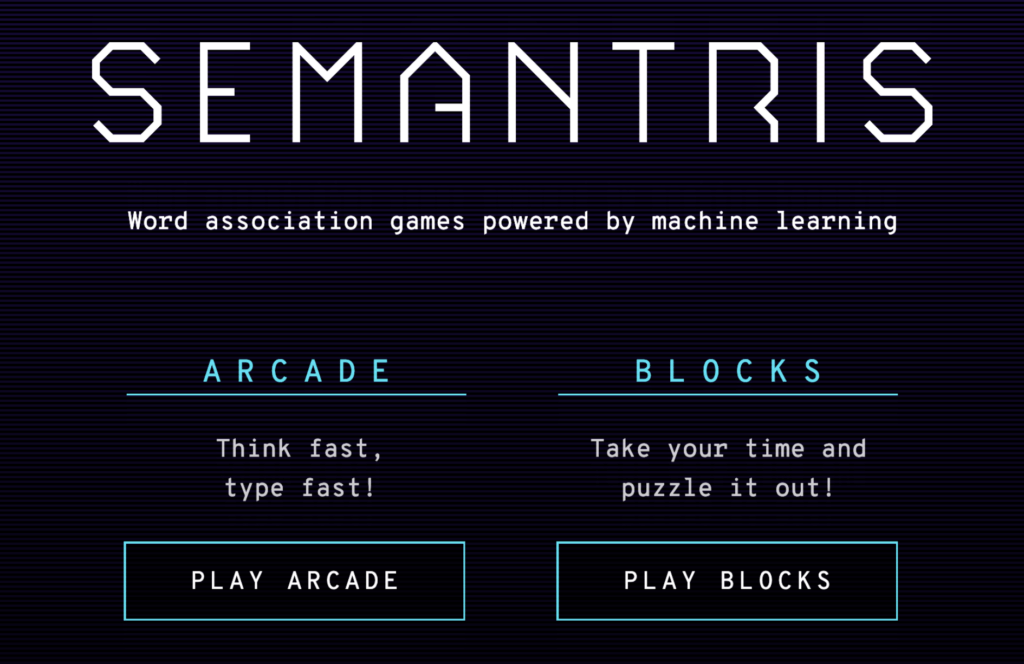
Link: https://research.google.com/semantris/
This word association game is powered by AI. You see a highlighted word and need to type a related word. The AI understands the meaning and connection between words.
What to observe: Notice how the AI understands that ‘hot’ relates to ‘sun’ or ‘fire’. It’s not just matching letters; it understands meaning. That’s Natural Language Processing.
Game 3: Quick, Draw! (Computer Vision Domain)
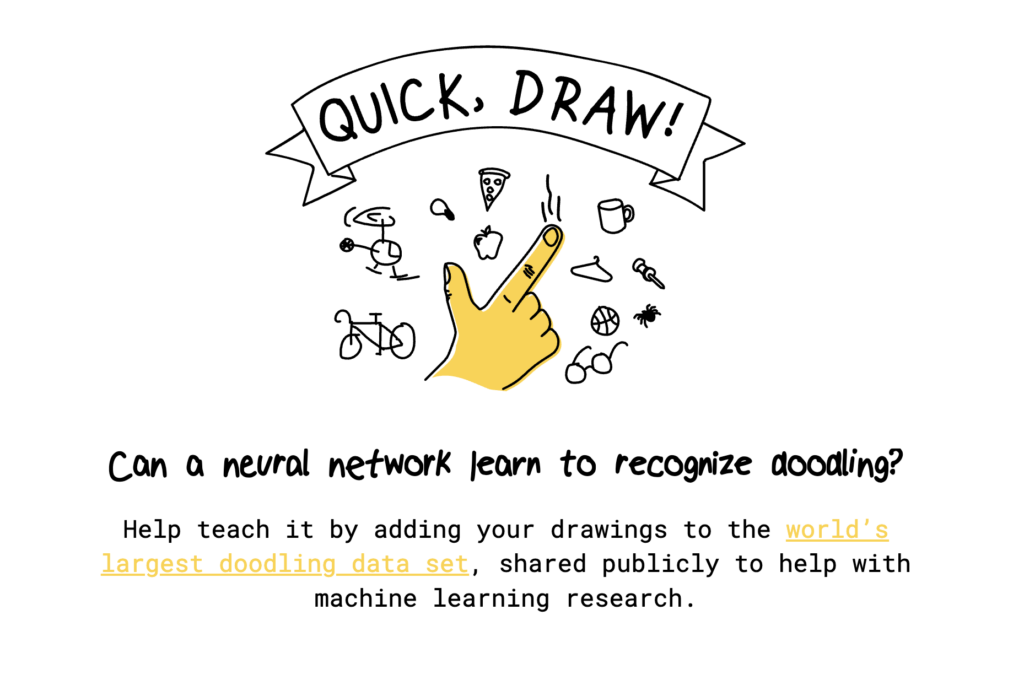
Link: https://quickdraw.withgoogle.com/
In this game, you’re asked to draw something (like a cat or bicycle) in 20 seconds. The AI tries to guess what you’re drawing — while you’re still drawing it!
What to observe: Even rough sketches get recognized. The AI has been trained on millions of drawings and can identify patterns in lines and shapes. That’s Computer Vision at work.
🧪 Activity: Reflect and Write
After playing all three games, answer these questions:
- Which game did you find most interesting? Why?
- Did you face any difficulty in any game? How did you overcome it?
- Write one thing you learned about each domain from these games.
Quick Recap
- Artificial Intelligence is the ability of machines to perform tasks that require human-like intelligence.
- AI learns from data, not from personal experiences like humans.
- The three domains of AI are Computer Vision (images/videos), NLP (text/speech), and Statistical Data (numbers/tables).
- AI is already part of daily life — face unlock, voice assistants, recommendations, and more.
- Most AI applications combine multiple domains working together.
- Data is the ‘fuel’ of AI — without good data, AI cannot learn effectively.
Next Lesson: The AI Project Cycle Explained: 6 Steps to Build Your First AI Project
EXERCISES
A. Fill in the Blanks
- When a machine can mimic human traits like decision-making and learning, it is said to have _________________.
- The three domains of AI are Computer Vision, Natural Language Processing, and _______________________.
- ________________ is the AI domain that works with images and videos.
- Voice assistants like Siri and Alexa use _____________________________ to understand human speech.
- AI learns patterns from ________________________ fed into it during training.
- Face unlock on smartphones is an application of_____________________ domain.
- Google Translate uses ______________________ to convert text from one language to another.
- Weather prediction systems use __________________ data domain of AI.
- Data is often called the ________________________ of AI.
- AI is a form of ________________________, a type of technology, and a field of study.
B. Multiple Choice Questions
1. Which of the following is an application of AI?
(a) Remote controlled drone
(b) Self-driving car
(c) Manual typewriter
(d) Ceiling fan
2. Which AI domain enables machines to understand images?
(a) Natural Language Processing
(b) Computer Vision
(c) Statistical Data
(d) None of these
3. What does NLP stand for in AI?
(a) Neural Learning Projection
(b) Neuro-Linguistic Programming
(c) Natural Language Processing
(d) Neural Logic Presentation
4. Which of the following is NOT a domain of AI?
(a) Computer Vision
(b) Database Management System
(c) Natural Language Processing
(d) Statistical Data
5. Face recognition on smartphones uses which domain of AI?
(a) NLP
(b) Statistical Data
(c) Computer Vision
(d) All of the above
6. Which AI application helps doctors detect diseases from X-rays?
(a) Chatbot
(b) Medical Imaging
(c) Spam Filter
(d) Weather Prediction
7. What type of data does the Statistical Data domain work with?
(a) Images and videos
(b) Text and speech
(c) Numbers and tables
(d) All of the above
8. Which of the following uses NLP?
(a) Face unlock
(b) Google Maps navigation
(c) Google Translate
(d) Self-driving car cameras
9. AI can be described as:
(a) A form of intelligence
(b) A type of technology
(c) A field of study
(d) All of the above
10. Which game demonstrates the Data domain of AI?
(a) Quick, Draw!
(b) Semantris
(c) Rock, Paper, Scissors AI
(d) Chess with a human
C. True or False
- AI can think and feel emotions just like humans. (__)
- Computer Vision allows machines to understand human speech. (__)
- Face unlock on smartphones is an example of AI. (__)
- NLP stands for Natural Language Processing. (__)
- AI learns from data, not from personal experiences. (__)
- Google Translate is an application of Computer Vision. (__)
- Weather prediction uses the Statistical Data domain of AI. (__)
- AI applications can combine multiple domains. (__)
- Spam filters in email use Natural Language Processing. (__)
- Self-driving cars only use one domain of AI. (__)
D. Define the Following (30-40 words each)
- Artificial Intelligence
- Computer Vision
- Natural Language Processing
- Statistical Data (in AI)
- Training Data
- Smart Assistant
- Face Recognition
E. Very Short Answer Questions (40-50 words each)
- What makes a machine ‘artificially intelligent’?
- Name the three domains of AI and their data types.
- Give two examples of AI applications that use Computer Vision.
- How does a voice assistant like Alexa work?
- Why is data called the ‘fuel’ of AI?
- What domain of AI does Google Translate use? Why?
- How does face unlock work on smartphones?
- Name two AI applications in banking.
- How do recommendation systems (like YouTube) learn what to suggest?
- What is the difference between Computer Vision and NLP?
F. Long Answer Questions (75-100 words each)
- Explain the three domains of AI with examples of each.
- How is AI used in our daily lives? Give at least four examples from different domains.
- Describe how AI helps in the healthcare industry.
- Compare and contrast Computer Vision and Natural Language Processing.
- Explain why AI needs data to learn. Use the example of teaching AI to recognize fruits.
- How do the three AI games (Rock Paper Scissors AI, Semantris, Quick Draw) demonstrate the three domains of AI?
- “AI is already all around us.” Justify this statement with examples.
ANSWER KEY
A. Fill in the Blanks – Answers
- Artificial Intelligence — When machines mimic human traits like learning and decision-making, they exhibit AI.
- Statistical Data — The three domains are CV, NLP, and Statistical Data (or Data Science).
- Computer Vision — CV enables machines to interpret visual information from images and videos.
- Natural Language Processing (NLP) — NLP processes human language in text and speech form.
- data — AI learns by identifying patterns in the data it is trained on.
- Computer Vision — Face unlock uses image analysis, which is Computer Vision.
- Natural Language Processing (NLP) — Translation involves understanding and generating text.
- Statistical — Weather prediction analyses numerical data patterns.
- fuel — AI cannot learn without data, just as vehicles cannot run without fuel.
- intelligence — AI is defined as intelligence, technology, and academic discipline.
B. Multiple Choice Questions – Answers
- (b) Self-driving car — Self-driving cars use AI to navigate; remote drones need human control.
- (b) Computer Vision — CV specifically processes visual data like images and videos.
- (c) Natural Language Processing — NLP is the correct expansion of this AI domain.
- (b) Database Management System — DBMS is software for managing databases, not an AI domain.
- (c) Computer Vision — Face recognition analyses visual features of faces.
- (b) Medical Imaging — AI analyses medical scans to detect diseases and abnormalities.
- (c) Numbers and tables — Statistical Data domain processes numerical/tabular information.
- (c) Google Translate — Translation involves text processing, which is NLP.
- (d) All of the above — AI is intelligence, technology, and academic discipline.
- (c) Rock, Paper, Scissors AI — This game learns patterns from your move history (data).
C. True or False – Answers
- False — AI follows programmed instructions; it cannot think or feel like humans.
- False — Computer Vision processes images/videos; NLP handles speech.
- True — Face unlock uses Computer Vision AI to identify facial features.
- True — NLP is the correct full form of this AI domain.
- True — Unlike humans, AI learns by analysing data patterns.
- False — Google Translate uses NLP, not Computer Vision.
- True — Weather prediction analyses numerical data patterns.
- True — Most real-world AI uses multiple domains together.
- True — Spam filters analyse text content using NLP.
- False — Self-driving cars use Computer Vision and Statistical Data together.
D. Definitions – Answers
1. Artificial Intelligence: AI is the ability of machines to perform tasks that normally require human intelligence, such as decision-making, pattern recognition, learning from experience, and understanding language.
2. Computer Vision: Computer Vision is the AI domain that enables machines to interpret and understand visual information from images and videos, similar to how human eyes and brain work together.
3. Natural Language Processing: NLP is the AI domain focused on enabling machines to understand, generate, and manipulate human language in both text and speech forms.
4. Statistical Data (in AI): This AI domain uses statistical techniques to analyse, interpret, and draw insights from numerical and tabular data to find patterns and make predictions.
5. Training Data: Training data is the information fed to an AI system during its learning phase, from which it identifies patterns and learns to make predictions or decisions.
6. Smart Assistant: A smart assistant is an AI-powered software (like Siri or Alexa) that uses NLP to understand voice commands, respond to questions, and perform tasks for users.
7. Face Recognition: Face recognition is a Computer Vision application that identifies or verifies a person by analysing and comparing facial features captured through a camera.
E. Very Short Answer Questions – Answers
1. What makes a machine ‘artificially intelligent’?
A machine becomes artificially intelligent when it can accomplish tasks by itself — collecting data, understanding it, analysing patterns, learning from experience, and improving its performance without explicit programming for every situation.
2. Name the three domains of AI and their data types.
The three domains are: Computer Vision (works with images and videos), Natural Language Processing (works with text and speech), and Statistical Data (works with numbers and tables).
3. Two examples of Computer Vision applications:
(1) Face unlock on smartphones that recognises facial features, and (2) Medical imaging where AI analyses X-rays and MRI scans to detect diseases like cancer.
4. How does a voice assistant like Alexa work?
Alexa uses NLP to recognise speech patterns, understand the meaning of words, and provide relevant responses. It also uses data to learn user preferences and improve its answers over time.
5. Why is data called the ‘fuel’ of AI?
Data is AI’s fuel because AI systems learn by finding patterns in data. Without sufficient quality data, even the smartest algorithms cannot learn effectively or make accurate predictions.
6. What domain does Google Translate use? Why?
Google Translate uses Natural Language Processing because it needs to understand text in one language, interpret its meaning, and generate equivalent text in another language.
7. How does face unlock work on smartphones?
The front camera captures facial features (eye distance, nose shape, jawline) and converts them to data. Each unlock attempt compares the live image with stored data. If features match, the phone unlocks.
8. Two AI applications in banking:
(1) Fraud detection where AI monitors transactions and flags unusual activity, and (2) Chatbots that provide 24/7 customer support for balance inquiries and account services.
9. How do recommendation systems learn what to suggest?
They analyse your viewing/purchase history (data), compare it with similar users, identify patterns in preferences, and predict content you’ll likely enjoy based on those patterns.
10. Difference between Computer Vision and NLP:
Computer Vision processes visual data (images, videos) to help machines ‘see’, while NLP processes language data (text, speech) to help machines ‘understand’ human communication.
F. Long Answer Questions – Answers
1. Three domains of AI with examples:
Computer Vision enables machines to see and interpret images/videos. Examples include face unlock, self-driving car cameras, and medical scan analysis. Natural Language Processing helps machines understand text and speech. Examples include Google Translate, voice assistants, and spam filters. Statistical Data uses numbers to find patterns and predict outcomes. Examples include weather forecasting, fraud detection, and stock market analysis. Each domain handles different data types but often works together in real applications.
2. AI in daily life with four examples:
AI surrounds us daily. Face unlock (Computer Vision) secures our phones by recognising facial features. Voice assistants like Siri (NLP) answer questions and set reminders. YouTube recommendations (Statistical Data) suggest videos based on viewing history. Google Maps (combines domains) predicts traffic and finds optimal routes. Banking apps use AI for fraud detection. Even email spam filters use NLP to identify junk mail. These examples show AI working across all three domains in everyday applications.
3. AI in healthcare:
AI revolutionises healthcare in multiple ways. Medical imaging uses Computer Vision to analyse X-rays, CT scans, and MRIs, detecting diseases like cancer earlier than human eyes often can. AI assists doctors with diagnosis by comparing symptoms against vast databases of medical knowledge. Robotic surgery uses AI for precision movements. Patient monitoring systems predict health emergencies before they occur. Drug discovery uses AI to analyse molecular data and identify potential treatments faster than traditional research methods.
4. Comparing Computer Vision and NLP:
Computer Vision and NLP are both AI domains but process different data. CV works with images and videos, enabling machines to ‘see’ — recognising faces, objects, and scenes. NLP works with text and speech, enabling machines to ‘understand’ language — translating, summarising, and responding. CV examples include face unlock and medical imaging. NLP examples include chatbots and voice assistants. Both domains often combine — video captioning uses CV to see and NLP to describe what’s happening.
5. Why AI needs data (fruit recognition example):
AI learns differently from humans. To teach AI to recognise an orange, we don’t explain what ‘orange’ means. Instead, we show thousands of orange images — different angles, lighting, ripeness levels. The AI identifies patterns: round shape, orange colour, textured surface. Through repeated exposure, it learns these features define ‘oranges’. When shown a new orange image, it matches patterns and identifies correctly. Without diverse, quality data, AI cannot learn accurately — hence data is called AI’s ‘fuel’.
6. How the three AI games demonstrate domains:
Rock Paper Scissors AI demonstrates the Data domain — it tracks your move patterns and uses statistical analysis to predict your next choice. The more you play, the better it predicts. Semantris demonstrates NLP — it understands word meanings and relationships, knowing ‘hot’ relates to ‘fire’ through language understanding. Quick Draw demonstrates Computer Vision — it recognises drawings by analysing visual patterns in lines and shapes, trained on millions of user sketches to identify objects even from rough drawings.
7. “AI is already all around us” — Justification:
AI has become invisible infrastructure in daily life. Smartphones use face unlock (CV) and voice assistants (NLP). Social media feeds are curated by AI recommendations (Data). Navigation apps predict traffic using AI. Email filters spam using NLP. Banks detect fraud using AI monitoring. Shopping sites personalise recommendations. Streaming services suggest content. Even autocorrect uses AI. Healthcare, banking, entertainment, communication — virtually every sector employs AI. We interact with AI dozens of times daily, often without realising it.
Next Lesson: The AI Project Cycle Explained: 6 Steps to Build Your First AI Project